
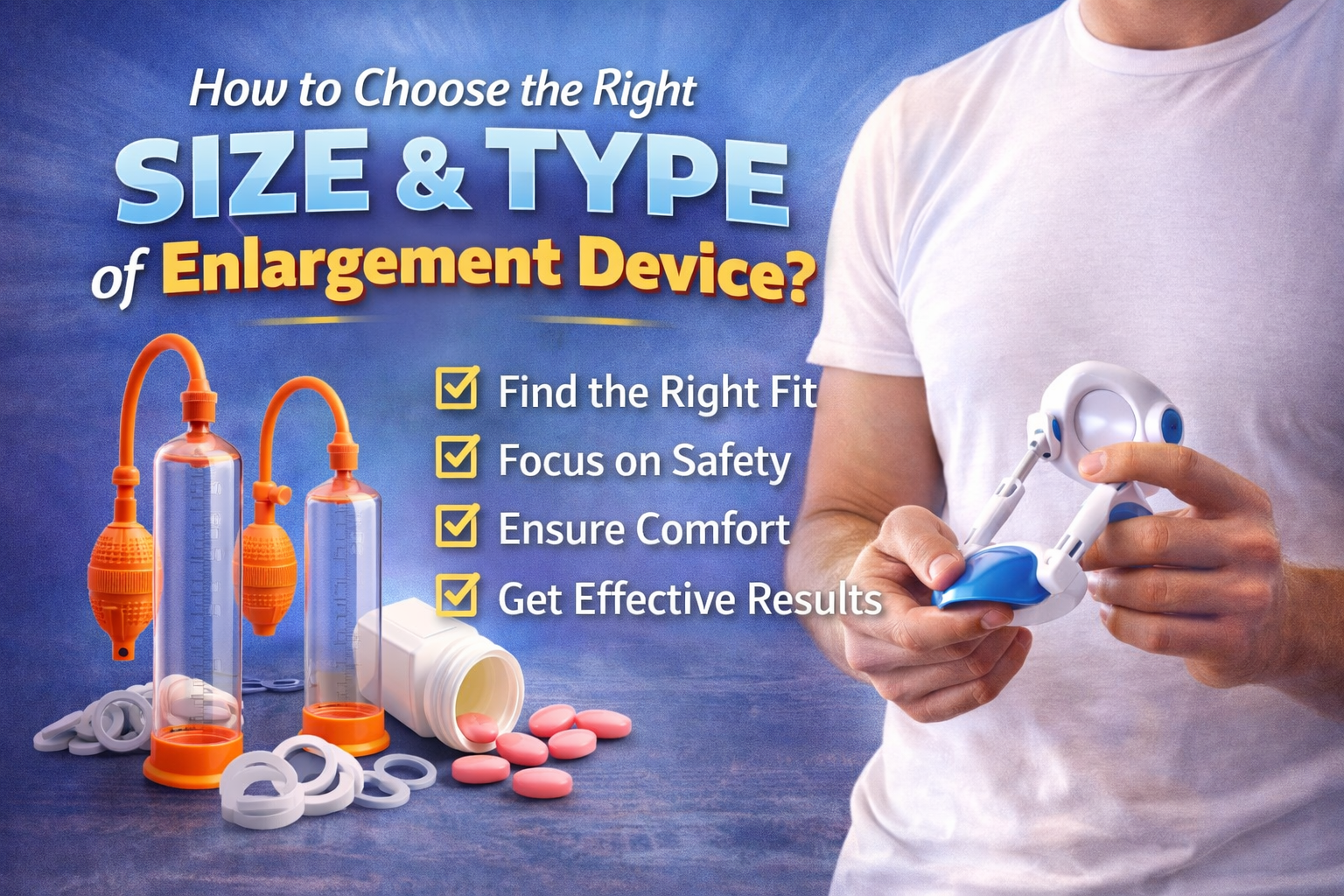
Enlargement devices claim to increase size through mechanical stretching or vacuum pressure. These devices have been around for decades with varying designs and quality levels. Some use vacuum pressure, creating negative space and pulling tissue. Others apply traction force to stretch tissue over extended time periods. Understanding what these devices actually do versus claims helps set realistic expectations. Knowing the different types allows you to understand what you’re actually considering.
Vacuum-Based Devices
A vacuum pump will first create negative pressure all around the area and draw blood into the tissue. It works by placing the device over the surface, creating an airtight seal. A hand pump or electric motor removes air, creating suction. The vacuum draws blood into the tissue, creating a temporary enlargement. These devices don’t provide permanent size changes despite marketing claims. Some men use them before intimacy for temporary fullness effects.
Traction-Based Devices
Traction devices apply a steady pulling force over extended periods. The device attaches and maintains constant, gentle tension on tissue. Users wear these devices for several hours daily over many months. The theory involves encouraging cell division through steady mechanical stress. Most men lack the dedication to use these devices consistently enough. The devices can be uncomfortable during the many hours of daily wear required. Realistic expectations involve modest possible changes after months of consistent use.
Combination Devices
Some devices combine vacuum and traction elements, attempting to provide both effects. These typically cost more than single-function devices. The added complexity can make proper use more difficult. More components mean more potential points of failure or malfunction. Some men find combination devices harder to use consistently. The price premium might not translate to better actual results. Understanding that a combination doesn’t necessarily mean superior helps evaluate these options. Often, simpler single-purpose devices work just as well with fewer complications.
Quality and Safety Features
Quality differences between devices affect both safety and potential effectiveness. Medical-grade devices undergo testing and meet safety standards. Quality devices include pressure gauges showing safe operating ranges. Quick-release mechanisms provide safety when pressure or tension becomes uncomfortable. Certification marks from health authorities suggest better quality control. Investing in quality protects your health more than saving money on cheap versions.
Realistic Expectations
Setting realistic expectations prevents disappointment and wasted money on these devices. Permanent size increases from devices are unlikely despite marketing claims. Traction devices might produce modest changes after many months of consistent use. Accepting your natural body often proves more beneficial than obsessing over devices. Understanding limitations helps decide whether the time and money investment makes sense. Many men ultimately realize that perceived size concerns matter less than they thought.
Conclusion
Enlargement devices come in vacuum-based, traction-based, and combination. Vacuum devices create temporary results that last a few hours at most. Traction devices require months of daily use for modest possible changes. Individual results vary, with some men seeing more effect than others. Choosing the proper size based on accurate measurements ensures safety and comfort. Quality differences significantly affect safety, with medical-grade options being superior.





Leave a comment
Your email address will not be published. Required fields are marked *